What size dehumidifier do I need? Pints by room and dampness
22, 35 or 50 pints? A sizing chart by space and dampness, why the 2019 DOE test changed the numbers, and three picks: bedroom, basement, cold garage.

In this article
- The three dehumidifiers we recommend, from smallest to biggest
- Frigidaire FHDD2233W1: 22 pints for one room
- BLACK+DECKER BDT50PWTBWF: 50 pints with a pump for the basement
- Ivation IVADDH09: a 19-pint desiccant for cold spaces
- What size dehumidifier do I need? Pints by space and dampness
- Why a 50-pint unit today is not a 50-pint unit from 2018
- Basement, bathroom, laundry: three cases that change the size
- Skip it if…
- Our verdict
- Sources and criteria for this guide
For one damp bedroom, bathroom or home office, a 22-pint dehumidifier is enough, and the one we recommend is the Frigidaire FHDD2233W1: 22 pints a day on the current Department of Energy rating, 235 watts and a published 47.5 dBA on low. A wet basement needs a 50-pint unit, ideally with a pump like the BLACK+DECKER BDT50PWTBWF, and a space that stays below 60 °F needs a desiccant model.
- For one bedroom or bathroom Frigidaire FHDD2233W1 22-Pint Dehumidifier Budget pick See on Amazon
- For a basement with no floor drain BLACK+DECKER BDT50PWTBWF 50-Pint Dehumidifier with Pump and Wi-Fi Premium See on Amazon
- For a cold garage or cabin Ivation IVADDH09 19-Pint Desiccant Dehumidifier Mid-range See on Amazon
The three dehumidifiers we recommend, from smallest to biggest
"What size dehumidifier do I need" comes down to three things: how much space you are drying, how damp it really is, and how cold it gets. Each of the three picks below answers one of those situations, and each comes with a spec sheet complete enough to compare. If you want the broader picture first, including our favorite 35-pint unit and running costs, our home dehumidifier guide starts there.
Frigidaire FHDD2233W1: 22 pints for one room
Frigidaire publishes the numbers most brands leave out: 22 pints a day, 235 watts at 115 V, an integrated energy factor of 1.57 liters per kWh, R-32 refrigerant and 47.5 to 49 dBA across its two fan speeds. It has a 24-hour timer, auto restart after a power cut, low-temperature operation and a port for continuous drainage. For a bedroom, a bathroom without a fan or a small apartment with one problem wall, that is the right amount of machine.
 Illustrative image
- 22 pints a day on the current DOE rating
- 235 W at 115 V, R-32 refrigerant
- 47.5–49 dBA published across two fan speeds
- Low-temperature operation, 24-hour timer, continuous drain port
| Capacity | 22 pints/day |
|---|---|
| Tank | 0.85 gal |
| Coverage | small to medium rooms |
| Power | 235 W |
| Noise level | 47.5–49 dBA |
| Technology | Compressor |
- The lowest draw of the three, 235 W, so long cycles stay cheap.
- A full, published spec sheet, noise included.
- Compact cabinet, about 17 inches tall, on casters.
- The 0.85-gallon bucket fills fast in a genuinely damp room; plan on the drain port.
- No pump and no Wi-Fi.
- Not the unit for a basement, whatever square footage a listing quotes.
Who it is for: one room with mild to moderate dampness, foggy windows or a musty closet, and a household that wants low noise.
BLACK+DECKER BDT50PWTBWF: 50 pints with a pump for the basement
A basement is where sizing goes wrong most often, because concrete walls and a cool slab keep feeding moisture into the air. This BLACK+DECKER removes up to 50 pints a day and has a built-in pump that can push water up to 16 feet, with a 16.4-foot hose in the box. That matters more than the pint rating if your only drain is a laundry sink or a window well. In our view, the pump is the deciding feature for most basements: without one, a 50-pint unit is only as good as the person emptying the bucket.
 Illustrative image
- 50 pints a day on the current DOE rating
- Built-in pump lifts water up to 16 ft, 16.4-ft hose included
- Wi-Fi control and adjustable humidistat
- Rated by the maker for up to 4,500 sq ft
| Capacity | 50 pints/day |
|---|---|
| Tank | about 1.6 gal |
| Coverage | up to 4,500 sq ft (maker) |
| Power | 540 W |
| Noise level | not published |
| Technology | Compressor with pump |
- Built-in pump with a 16-foot lift, so the water can go up to a sink or out a window.
- Wi-Fi and an adjustable humidistat to set it and forget it.
- Enough capacity for a finished basement or a whole damp floor.
- Black+Decker does not publish a dBA figure, and owners describe it as clearly audible.
- About 41 pounds and 540 W.
- Pumps need a periodic check: a kinked hose or debris in the reservoir stops the drain.
Who it is for: basements, crawl-space doors and laundry rooms with no floor drain nearby.
Ivation IVADDH09: a 19-pint desiccant for cold spaces
A compressor dehumidifier pulls water out by chilling air below its dew point, and in a cold room it struggles and frosts up. A desiccant rotor does not depend on chilling anything. Ivation rates this unit at 19 pints a day at 68 °F and 60% relative humidity, for spaces up to 410 square feet, and says it runs continuously from 33 °F to 104 °F. That makes it the logical pick for an unheated garage, a cabin closed for the winter, a boat or an attic storage room.
 Illustrative image
- Desiccant rotor, no compressor
- 19 pints a day at 68 °F and 60% RH
- Rated for spaces up to 410 sq ft
- Runs from 33 °F to 104 °F, continuous drain hose included
| Capacity | 19 pints/day (68 °F) |
|---|---|
| Tank | about 0.75 gal |
| Coverage | up to 410 sq ft |
| Power | about 670 W |
| Noise level | not published |
| Technology | Desiccant |
- Keeps working in cold spaces where compressor units lose most of their output.
- No compressor, so no cycling noise or vibration.
- About 15.5 pounds with a carry handle, easy to move.
- Uses more electricity per pint removed than any compressor unit, around 670 W according to spec listings.
- Warms the air coming out, a downside in summer.
- Small bucket; below freezing, collected water can ice up.
Who it is for: unheated garages, cabins, RVs and storage rooms that sit cold for months.
| Frigidaire FHDD2233W1 22-Pint Dehumidifier | BLACK+DECKER BDT50PWTBWF 50-Pint Dehumidifier with Pump and Wi-Fi | Ivation IVADDH09 19-Pint Desiccant Dehumidifier | |
|---|---|---|---|
| Best for | For one bedroom or bathroom | For a basement with no floor drain | For a cold garage or cabin |
| Capacity | 22 pints/day | 50 pints/day | 19 pints/day (68 °F) |
| Tank | 0.85 gal | about 1.6 gal | about 0.75 gal |
| Coverage | small to medium rooms | up to 4,500 sq ft (maker) | up to 410 sq ft |
| Power | 235 W | 540 W | about 670 W |
| Noise level | 47.5–49 dBA | not published | not published |
| Technology | Compressor | Compressor with pump | Desiccant |
| Price band | Budget pick | Premium | Mid-range |
| See on Amazon | See on Amazon | See on Amazon |
What size dehumidifier do I need? Pints by space and dampness
Square footage on a listing is a marketing number for open, mildly damp space. Dampness matters more, so before you buy, leave a cheap hygrometer in the room for two days. The chart sums up the practical guidance from manufacturer spec sheets and ENERGY STAR's buying advice, using today's pint ratings.
| Space | Typical size | Moderately damp | Very damp or wet |
|---|---|---|---|
| Bathroom, closet or small bedroom | up to 500 sq ft | 20–22 pints | 22–35 pints |
| Large bedroom or studio apartment | 500–1,000 sq ft | 22 pints | 35 pints |
| Apartment or first floor | 1,000–1,500 sq ft | 35 pints | 50 pints |
| Basement | any size | 35–50 pints | 50 pints with a pump |
| Unheated space below 60 °F | any size | desiccant: technology matters more than capacity | |
The middle row is the busiest part of the market, and our pick for it, the 35 pint dehumidifier from Midea, is in our main guide.
Why a 50-pint unit today is not a 50-pint unit from 2018
In 2019 the Department of Energy changed the test: capacity is now measured at 65 °F and 60% relative humidity instead of 80 °F, which is closer to a real basement. The same machine produces a smaller number under the new test, so older 70-pint models roughly correspond to today's 50-pint class, and older 50-pint units to today's 35-pint class. If you are replacing an old dehumidifier, compare the class, not the number on the old label.
Between two sizes we would buy the bigger one. A larger unit reaches the humidity you set sooner, shuts off and runs fewer hours. The exception is cold space, where a bigger compressor does not help at all.
Basement, bathroom, laundry: three cases that change the size
The basement. Concrete walls and a slab that stays cool all year. This is where under-sizing shows, so a 50 pint dehumidifier with pump is the sensible default, unless a floor drain sits within hose length and gravity can do the job for free.
The windowless bathroom. A small space with sharp humidity spikes after every shower. A 22-pint unit is plenty, but run it with a hose to the tub or shower drain; a sub-gallon bucket emptied every night gets old quickly.
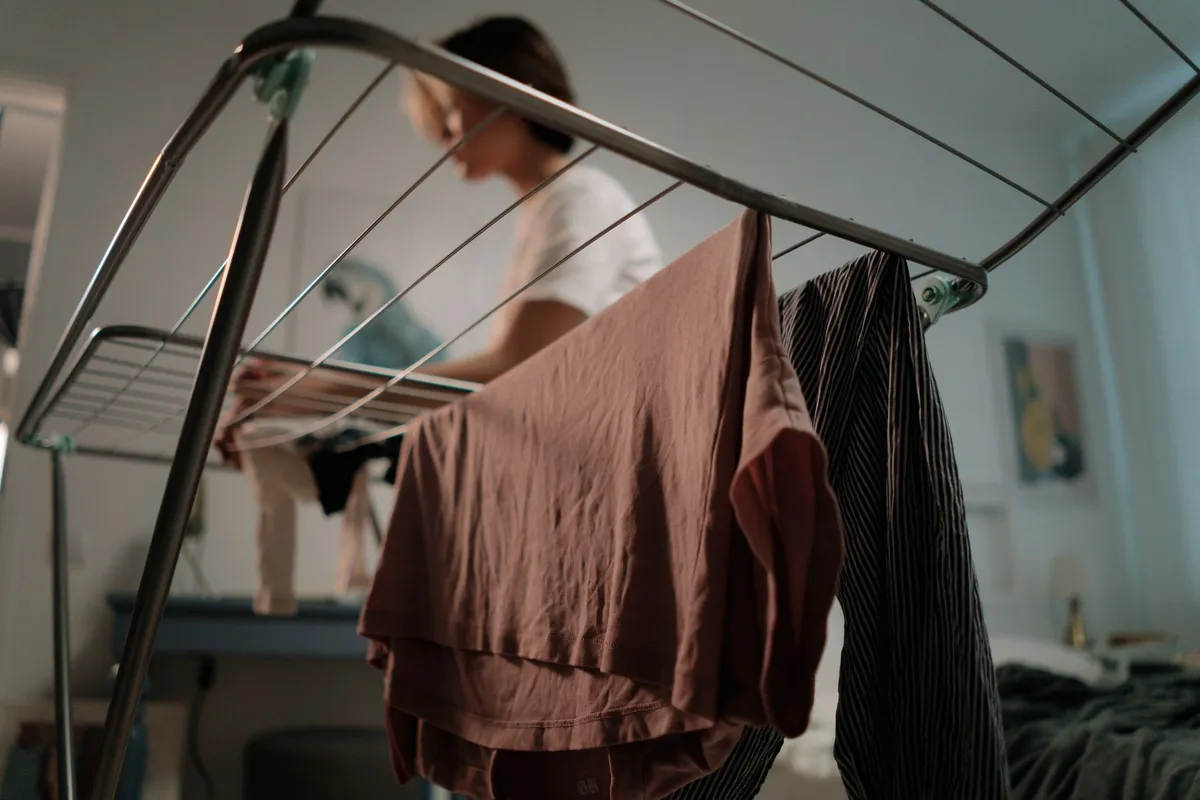
Laundry dried indoors. A full load of wet clothes releases several pints of water as it dries. Size up, close the door and let the unit run until the rack is dry. If the rest of the house goes the other way and gets bone dry with the heat on, our guide to the evaporative humidifier covers that side of winter.
Skip it if…
If mold shows up in one spot, say behind a dresser on an outside wall, pull the furniture a few inches off the wall and get air moving before buying anything. If water is coming in, through a crack in the foundation or a gutter that dumps next to the house, a dehumidifier treats the symptom: fix the water first. If you were holding out for the sales, our page on what to expect on Black Friday explains how to read the deals.
Our verdict
One damp bedroom, bathroom or office: Frigidaire FHDD2233W1, because 22 pints is enough and it publishes low noise and low wattage.
Basement or laundry room with no floor drain: BLACK+DECKER BDT50PWTBWF, for the 50-pint capacity and a pump that lifts water 16 feet.
Unheated garage, cabin or storage room: Ivation IVADDH09, because a desiccant rotor keeps working where compressors stall.
See it on Amazon.com Paid link
Sources and criteria for this guide
We compared manufacturer spec sheets (Frigidaire's published product specifications, Black+Decker's and Ivation's product pages and manuals), the Department of Energy's dehumidifier test procedure and ENERGY STAR's guidance, plus reviews from RTINGS, Reviewed and Tom's Guide. We read owner reviews with an eye on the ones written months after purchase, about pumps, buckets and noise. Every pick is sold on Amazon.com, rated under the current DOE test and backed by US warranty support.
Frequently asked questions
What size dehumidifier do I need for a basement?
What size dehumidifier do I need for a bedroom?
Is a bigger dehumidifier more expensive to run?
Is a 35 pint dehumidifier enough for 1,500 sq ft?
What humidity should I set my dehumidifier to?
As an Amazon Associate I earn from qualifying purchases.

Emily Carter
Editorial byline of the English edition for home, kitchen and beauty. Angle: what verified reviews say happens after a month of use, and the cheap products that surprise.
Guide produced by the editorial team with AI tools from verified sources and published under the editorial responsibility of Andrea Bertolotti. How we work · Report an error
You may also like

Dehumidifiers: which to buy and what size you need
How many pints a day you actually need, what it costs to run, and which unit to buy for a basement, a single damp bedroom or a house that sweats all winter.
Most energy efficient space heater: 3 oil-filled picks
Which space heater uses the least electricity? How to work out real kWh, why oil-filled radiators suit long hours, and three picks with digital thermostats and ECO mode.

Air fryer price comparison: what you get at each price tier
How much to spend on an air fryer: what you actually gain moving from a budget model to midrange and premium, with one recommended pick in each tier.
The best guides, once a week
No spam: only products worth knowing about and deals that make sense.