Noise cancelling headphones for studying: four picks that work
Which noise cancelling headphones to buy for studying in the U.S.: four over-ear pairs sold on Amazon.com, compared on silence, comfort, battery and multipoint.

In this article
- How we chose
- The four headphones
- Soundcore Space Q45: the most silence per dollar
- Sennheiser ACCENTUM Wireless: the light one
- Bose QuietComfort Headphones: built for long sessions
- Sony WH-1000XM5: the benchmark for commuters
- What noise cancelling actually blocks
- Comfort for long study sessions: weight, clamp and pads
- Battery and multipoint: the laptop-plus-phone setup
- Mistakes students make when buying ANC headphones
- When to buy, and when to skip them
- Our verdict
For most students, the noise cancelling headphones for studying we recommend are the Soundcore Space Q45: adaptive cancellation that handles steady rumble well, a stated 50 hours with ANC on and a price in the budget tier. If you wear them for whole afternoons, the Bose QuietComfort is the softer fit, and the Sony WH-1000XM5 remains the pair to beat on a train or a plane.
- Best for most students Soundcore by Anker Space Q45 Budget pick See on Amazon
- Lightest Sennheiser ACCENTUM Wireless Budget pick See on Amazon
- Most comfortable for long sessions Bose QuietComfort Headphones Premium See on Amazon
- For commuters and flights Sony WH-1000XM5 Premium See on Amazon
How we chose
We do not test headphones ourselves. We compare manufacturer spec sheets from Anker, Sennheiser, Sony and Bose with the lab measurements published by RTINGS and SoundGuys and with verified reviews from owners who have used each pair for months. Four things carry weight for studying: battery life with cancellation on, weight and clamping force, multipoint for a laptop and a phone at once, and whether you can buy replacement ear pads when the originals flatten out.
Two filters kept the list short. First, every pair had to be sold on Amazon.com under its U.S. listing, not as an import. Second, we left out earbuds: they fit in a pocket, but the seal depends on your ear canal and battery runs out halfway through a long day. If portability matters more than hours of wear, our comparison of noise cancelling earbuds and over-ear models covers that trade.
The four headphones
Soundcore Space Q45: the most silence per dollar
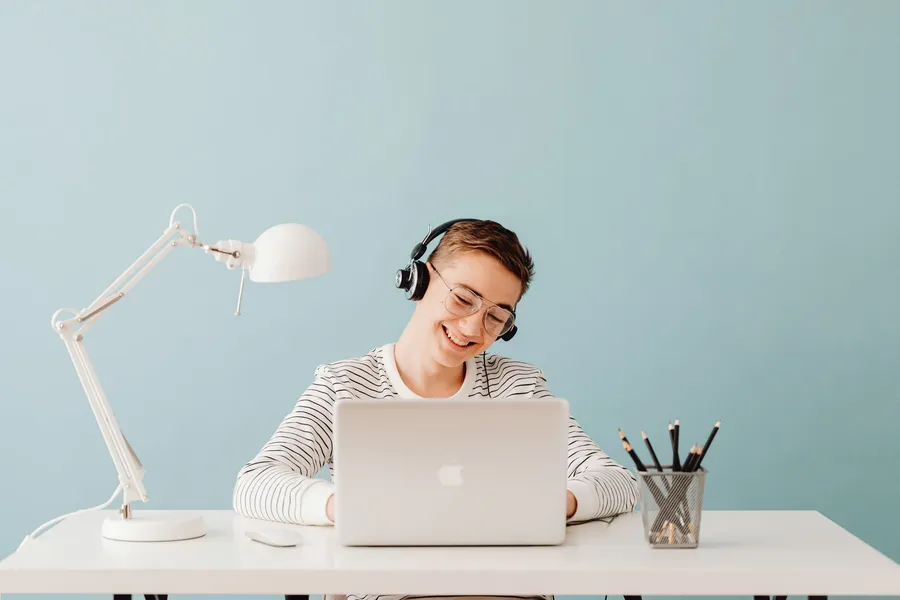
Anker figured out early that most buyers want quiet first and a sparkling treble second. The Space Q45 states 50 hours with cancellation on and 65 without, folds into a hard case and pairs with an app that has a real equalizer. On steady noise like a dorm fan or a bus engine, reviewers consistently place it above what its price tier suggests. Owners flag two limits after a few months: at about 295 grams it is the heaviest pair here, and the call microphones struggle outdoors.
 Illustrative image
- Strong cancellation on steady, low-frequency noise
- Stated 50 hours with ANC on
- Folds flat into a hard case for a backpack
| Noise cancelling | adaptive, hybrid |
|---|---|
| Battery life | 50 h with ANC, 65 h without |
| Quick charge | 5 min → 4 h |
| Codecs | SBC, AAC, LDAC |
| Multipoint | yes |
| Weight | 295 g |
- Stated 50 hours with ANC on, tied for the longest in this guide
- Folds flat and ships with a hard case
- App with a custom equalizer and adjustable cancellation
- LDAC for Android phones that support it
- About 295 grams: you notice the weight by evening
- Call microphones are mediocre on the street
- Replacement pads are harder to find than for Sony or Bose
Who it's for: students who want strong cancellation and a battery that lasts a full week of classes, on a tight budget.
Sennheiser ACCENTUM Wireless: the light one
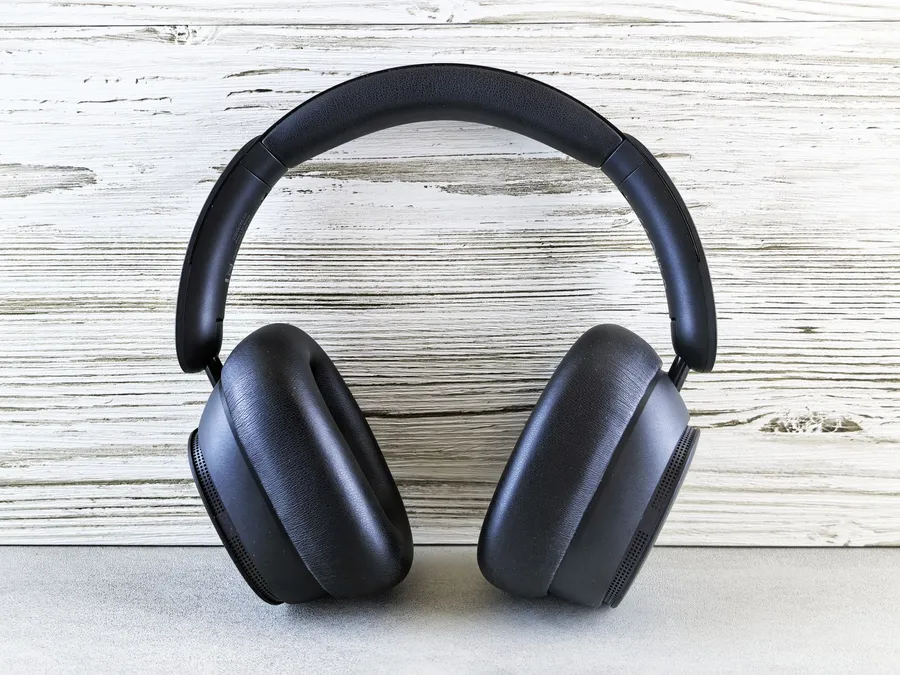
At about 222 grams the ACCENTUM is the lightest pair we recommend, and that matters more than any spec once you pass the two-hour mark. Sennheiser states 50 hours with hybrid cancellation, plus a 10-minute charge for about five hours of play. The tuning is balanced and voices stay clear at low volume, which suits lectures and podcasts. Cancellation is a step below the Sony and the Bose on low rumble. There is also no headphone jack: wired listening goes through USB-C, and there is no sensor to pause music when you lift a cup.
 Illustrative image
- Lightest pair in this guide
- Hybrid noise cancellation
- aptX HD on Android laptops and phones
| Noise cancelling | hybrid |
|---|---|
| Battery life | 50 h with ANC |
| Quick charge | 10 min → 5 h |
| Codecs | SBC, AAC, aptX, aptX HD |
| Multipoint | yes |
| Weight | 222 g |
- About 222 grams, the lightest here
- Stated 50 hours and a quick 10-minute top-up
- aptX and aptX HD on top of AAC
- Clear voices at low volume
- No 3.5 mm jack, wired audio over USB-C only
- No wear detection to auto-pause
- Cancellation weaker than the premium pairs on engines and HVAC
Who it's for: anyone who wears headphones for four or five hours straight and finds heavier models tiring.
Bose QuietComfort Headphones: built for long sessions
Bose has spent decades on one idea: headphones you forget you are wearing. The QuietComfort Headphones weigh about 240 grams, with large, soft cushions and moderate clamp, and comfort is the point owners mention most. SoundGuys measured 10 to 30 dB of reduction below 1 kHz, enough to flatten a commute, and recorded just over 27 hours of playback against Bose's stated 24. The weak spots are on the sound side: only SBC and AAC, and an app equalizer limited to three bands.
 Illustrative image
- Large, soft ear cushions built for long sessions
- Quiet, Aware and custom modes in the Bose app
- Folds into a carry case; wired cable included
| Noise cancelling | adjustable (Quiet, Aware, custom) |
|---|---|
| Battery life | 24 h with ANC |
| Quick charge | 15 min → 2.5 h |
| Codecs | SBC, AAC |
| Multipoint | yes |
| Weight | 240 g |
- Plush cushions and gentle clamp, comfortable with glasses
- Quiet, Aware and custom modes in the Bose app
- Folds into a carry case, cable included
- Bose sells replacement ear cushions
- Stated 24 hours, the shortest battery here
- Only SBC and AAC codecs
- Three-band equalizer, bass-heavy by default
Who it's for: students who study for whole afternoons and care more about how the headphones feel than how they measure.
Sony WH-1000XM5: the benchmark for commuters
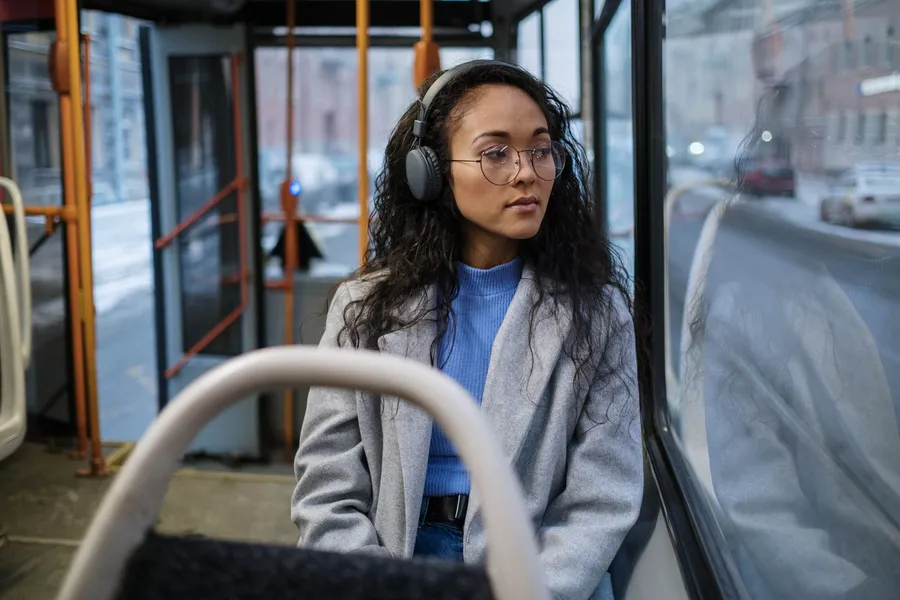
With the XM6 now on shelves, the XM5 has dropped into a friendlier part of the premium tier, and it still sets the bar for cancellation. Eight microphones and two processors handle engine drone, AC hum and office chatter better than anything else in this guide. Sony states 30 hours with ANC, and a 3-minute charge buys about 3 hours. Two flaws are well known: the cups swivel flat but do not fold, so the case is bulky, and the matte finish shows skin oil.
 Illustrative image
- Eight microphones and two dedicated processors
- Sony rates 30 hours with active cancellation
- LDAC and multipoint connection
- About 250 grams, with swiveling cups
- USB-C fast charging and a 3.5 mm input
| Noise cancelling | adaptive, 8 microphones |
|---|---|
| Battery life | 30 h with ANC, 40 h without |
| Quick charge | 3 min → 3 h |
| Codecs | SBC, AAC, LDAC |
| Multipoint | yes |
| Weight | 250 g |
- The strongest cancellation of the four
- LDAC and fast multipoint switching
- 3-minute charge for about 3 hours
- Replacement ear pads are easy to find
- Does not fold: the case takes real backpack space
- Stated 30 hours, less than the Soundcore and the Sennheiser
- Matte cups pick up grime
Who it's for: commuters who study on trains and buses, and anyone who flies home for the holidays.
If what you need between study sessions is hands-free calls and voice notes rather than silence, AI smart glasses cover that job with open ears and no clamp on your head.
| Soundcore (Anker) Soundcore by Anker Space Q45 | Sennheiser ACCENTUM Wireless | Bose QuietComfort Headphones | Sony WH-1000XM5 | |
|---|---|---|---|---|
| Best for | Best for most students | Lightest | Most comfortable for long sessions | For commuters and flights |
| Noise cancelling | adaptive, hybrid | hybrid | adjustable (Quiet, Aware, custom) | adaptive, 8 microphones |
| Battery life | 50 h with ANC, 65 h without | 50 h with ANC | 24 h with ANC | 30 h with ANC, 40 h without |
| Quick charge | 5 min → 4 h | 10 min → 5 h | 15 min → 2.5 h | 3 min → 3 h |
| Codecs | SBC, AAC, LDAC | SBC, AAC, aptX, aptX HD | SBC, AAC | SBC, AAC, LDAC |
| Multipoint | yes | yes | yes | yes |
| Weight | 295 g | 222 g | 240 g | 250 g |
| Foldable | yes, with case | no (cups swivel flat) | yes, with case | no (case included) |
| Bluetooth | 5.3 | 5.2 | 5.1 | 5.2 |
| Price band | Budget pick | Budget pick | Premium | Premium |
| See on Amazon | See on Amazon | See on Amazon | See on Amazon |
What noise cancelling actually blocks
Noise is not one thing. A subway car, a laptop fan and an air conditioner sit mostly below 500 Hz: constant, predictable, ideal for active cancellation, where outer microphones hear the sound and the electronics answer with an inverted wave. Voices are a different job. They live between roughly 500 Hz and 3 kHz and change every second, so the electronics can do little and the pad seal does most of the work.
| Noise | How much ANC helps | What makes the difference |
|---|---|---|
| Bus, subway, plane cabin | A lot | Any decent ANC |
| Laptop fan, AC, fridge hum | A lot | Quality of the inner microphones |
| Library murmur, café chatter | Partly | Pad seal and depth |
| A roommate on a call | Little | Closed cups plus low background music |
| Keyboards, doors, dishes | Almost none | Passive isolation only |
In practice, all four pairs fix the commute and the dorm fan. If your problem is a roommate on FaceTime, play quiet brown noise under the cancellation; that covers voices better than any setting.
Comfort for long study sessions: weight, clamp and pads
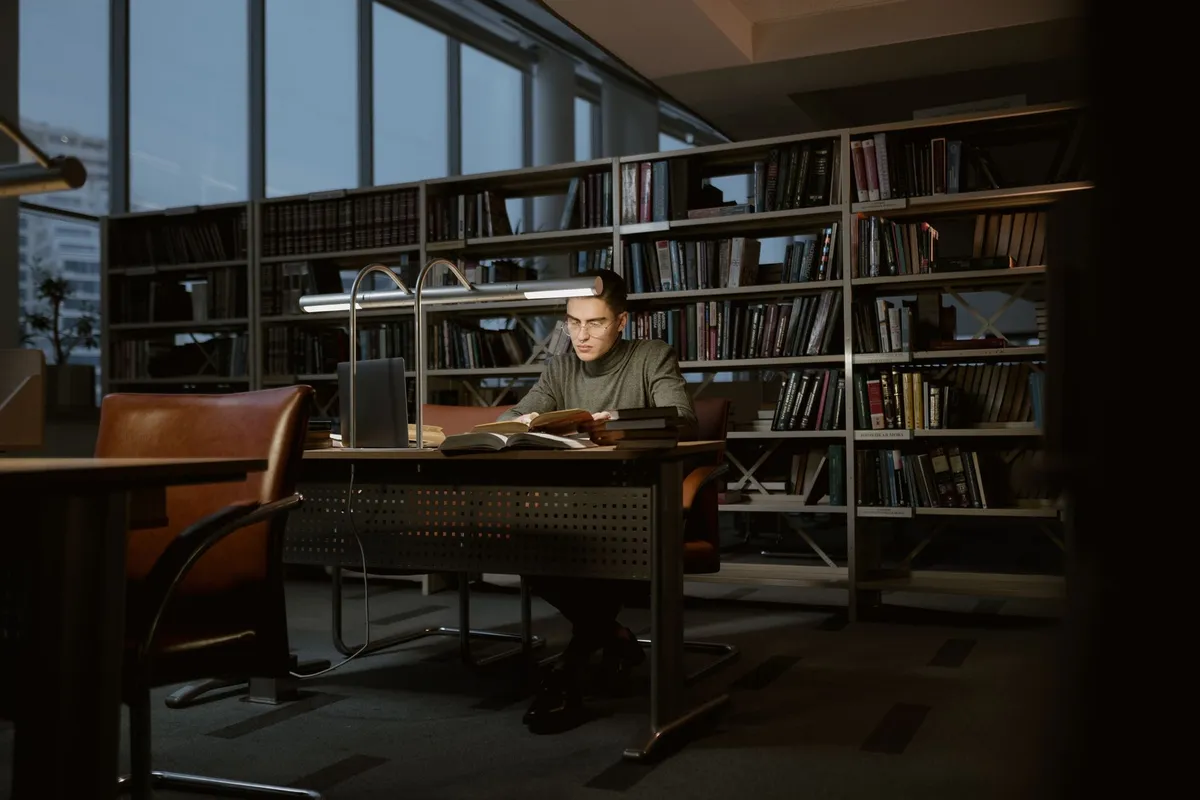
A store demo lasts two minutes, and every pair feels fine. Trouble shows up later, as warmth around the ears and a sore spot on top of the head. Weight is the first clue: the Sennheiser and the Bose sit around 220 to 240 grams, the Soundcore close to 300. Clamping force is the second, and it hits glasses wearers hardest, since the arms break the seal and press into the temples. Softer, deeper cushions fix both problems, which is why the Bose ends up on so many students' heads.
Pads wear out in a year or two of daily use, faster in a humid summer. Check that replacements exist before you buy: Bose sells its own cushion kit, and third-party pads cover the Sony and most other popular models.
Battery and multipoint: the laptop-plus-phone setup
Fifty hours, as on the Soundcore and the Sennheiser, means charging once a week. Twenty-four to thirty hours, as on the Bose and the Sony, means charging every few days, which is fine if a USB-C cable already lives in your backpack. All four support multipoint, so a lecture on the laptop and a text alert on the phone reach the same headphones without re-pairing. On a Windows laptop, keep calls on the headset and music on the computer to avoid the switch-lag owners sometimes report.
Mistakes students make when buying ANC headphones
The most common one is buying for sound quality and then using the headphones for silence. Codec logos and driver sizes look impressive on a product page, yet for six hours of reading what counts is cancellation, comfort and battery, in that order. The second is ignoring the microphone. If you take online classes or join group calls, a pair that sounds muffled outdoors will annoy everyone else on the call; the Sony and the Bose handle wind and street noise better than the Soundcore.
The third mistake is forgetting where the headphones live between classes. A pair that does not fold, like the Sony, needs a backpack with room to spare; the Soundcore and the Bose collapse into smaller cases. Last, check what your devices speak: LDAC does nothing on an iPhone, and aptX does nothing on a Mac. For most students AAC is the codec in use every day, and all four pairs support it.
When to buy, and when to skip them
Skip over-ear ANC if you mostly study in silent libraries where a pair of foam earplugs does the job, or if you need something that fits in a jacket pocket. Younger kids need something different too: for elementary schoolers, look at volume limiting headphones sized for smaller heads. Premium pairs like the Sony and the Bose are regulars on the deal lists around October Prime Day; if your current headphones still work, it is worth checking before you buy.
Our verdict
For most students: the Soundcore Space Q45, the best mix of cancellation and battery in the budget tier.
For long afternoons or glasses: the Bose QuietComfort Headphones for the softest fit, or the Sennheiser ACCENTUM Wireless if you want the lightest pair and the longer battery.
For commuters and flights: the Sony WH-1000XM5, still the strongest cancellation here.
See on Amazon.com Paid link
Frequently asked questions
Is noise cancelling bad for your ears?
Noise cancelling headphones or earplugs for studying?
Do ANC headphones work when the battery dies?
Which noise cancelling headphones are best with glasses?
Do I need LDAC or aptX for studying?
As an Amazon Associate I earn from qualifying purchases.

James Whitaker
Editorial byline of the English edition for gadgets, audio and smart home. Angle: distrust superlatives and explain specs in plain words without losing sight of the price.
Guide produced by the editorial team with AI tools from verified sources and published under the editorial responsibility of Andrea Bertolotti. How we work · Report an error
You may also like
Best Kids Headphones for School: Durable, Volume-Limited Picks
Three kids headphones capped at 85 dB, picked for school, home and travel: which ones survive the backpack, and when a cable matters more than Bluetooth.

Best Monitor for Kids and Families: 4 Picks for Homework
The best monitor for kids and families sharing a homework desk: height-adjustable stands, flicker-free IPS screens and the right ports for Chromebooks, PCs and consoles.

AI smart glasses: which to buy and what they actually do
Ray-Ban Meta Gen 2, Oakley Meta HSTN and the new Oakley Meta Vanguard compared: what the AI does, real battery life, prescription options and privacy.
The best guides, once a week
No spam: only products worth knowing about and deals that make sense.