Best electric kettle: which one to buy for tea, coffee and cooking
Presets or boil-only, gooseneck or standard, 0.8 or 1.7 liters: the four electric kettles we recommend on Amazon.com and how to pick the right one.
In this article
- How we chose
- The four kettles we recommend
- Cuisinart PerfecTemp CPK-17P1: the one to get
- Hamilton Beach 40880: the budget pick
- Cosori Gooseneck Kettle: for pour-over coffee
- Smeg KLF03: when the kettle lives on the counter
- Why US kettles are slower than European ones
- Variable temperature: who actually needs it
- Stainless steel, glass or plastic
- The small details you notice every day
- When to buy one, and when to skip it
- Our verdict
The electric kettle we'd buy for most American kitchens is the Cuisinart PerfecTemp CPK-17P1: 1.7 liters, stainless steel, and six presets from 160°F to a full boil, with a 30-minute keep-warm. If all you ever do is boil water for black tea, oatmeal or a head start on pasta, the Hamilton Beach 40880 does that job for a fraction of the price.
- Best for most households Cuisinart PerfecTemp CPK-17P1 Cordless Electric Kettle, 1.7 L Mid-range See on Amazon
- Best on a budget Hamilton Beach 40880 Stainless Steel Electric Kettle, 1.7 L Budget pick See on Amazon
- Best for pour-over coffee COSORI Electric Gooseneck Kettle with 5 Presets, 0.8 L Budget pick See on Amazon
- Best for design lovers SMEG KLF03BLUS 50's Retro Style Electric Kettle, Black Premium See on Amazon
How we chose
We started from the best-selling kettles on Amazon.com and cross-checked them against manufacturer spec sheets, published reviews from outlets such as Wirecutter, Tom's Guide, Reviewed and Trusted Reviews, and verified owner reviews written six months or more after purchase. We don't physically test products: we weigh published measurements, declared specs and the problems that keep coming up in long-term reviews.
Five things mattered. A capacity that matches real use, since a kettle that's too big means boiling water you'll pour down the drain. What touches the water. A removable scale filter, which matters a lot in hard-water areas of the Southwest and Midwest. Temperature control, but only for the people who'll actually use it. And brands with parts, support and a track record in the US. It's the same approach behind our guide on how to choose an air fryer.
The four kettles we recommend
Cuisinart PerfecTemp CPK-17P1: the one to get
 Illustrative image
- Six presets from 160°F to boil
- 30-minute keep-warm
- 1.7 L, 1,500 W, stainless steel
| Capacity | 1.7 L |
|---|---|
| Power | 1,500 W |
| Temperature range | 6 presets, 160–212°F |
| Material | Stainless steel |
| Functions | 30-min keep-warm, removable scale filter |
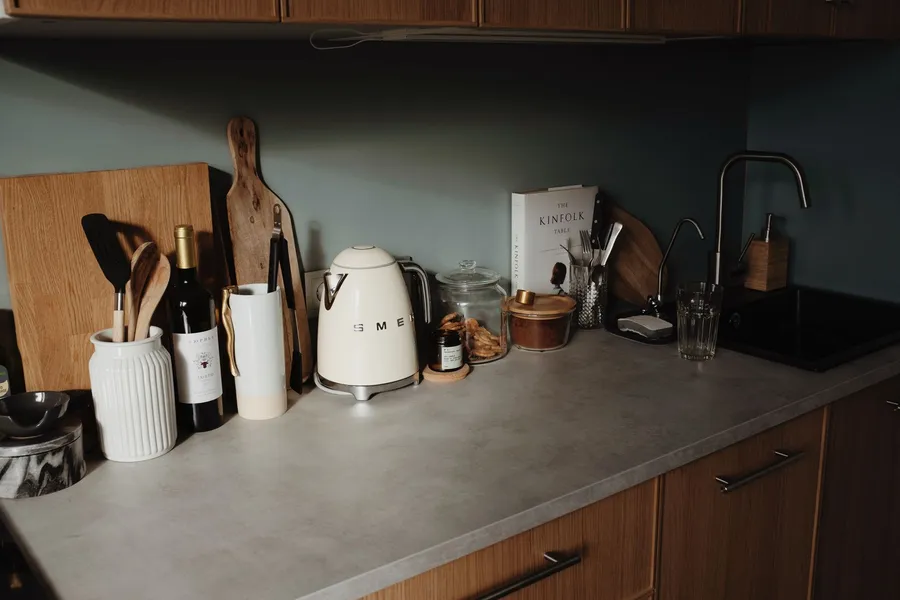
Six buttons on the handle cover the useful range: 160°F for delicate green tea, 175 and 185°F for white and green teas, 190°F for oolong, 200°F for French press and a full boil for black and herbal tea. A 30-minute keep-warm means the second cup doesn't need a second boil. It's a stainless steel 1.7-liter kettle with a removable scale filter and a blue indicator light, and it has shown up on major review sites' shortlists for years.
- Six well-chosen presets, plus keep-warm
- Full 1.7-liter capacity
- Long track record and easy-to-find support
- Single-wall steel: the outside gets hot
- Mid-range price for a kettle
- Presets come in fixed steps, with no degree-by-degree control
Who it's for: households where someone drinks green or white tea, or makes French press coffee, most days.
Hamilton Beach 40880: the budget pick
 Illustrative image
- 1.7 L, 1,500 W
- Concealed heating element
- Auto shutoff and boil-dry protection
| Capacity | 1.7 L |
|---|---|
| Power | 1,500 W |
| Temperature range | Boil only |
| Material | Stainless steel |
| Functions | Auto shutoff, boil-dry protection |
A plain 1.7-liter stainless kettle with a concealed heating element, auto shutoff and boil-dry protection. No presets, no display, nothing to break. For black tea, instant oatmeal, ramen or pre-boiling pasta water, that's all you need.
- Inexpensive and simple
- Concealed element is easy to wipe clean
- Big enough for a family
- Boil only, no temperature control
- Hot exterior during use
- Fit and finish are basic, as you'd expect at this price
Who it's for: anyone who just wants hot water fast, dorm rooms included.
Cosori Gooseneck Kettle: for pour-over coffee
 Illustrative image
- Gooseneck spout for pour-over
- Five presets, up to 60-minute keep-warm
- 0.8 L, 1,200 W, stainless steel inner lid and bottom
| Capacity | 0.8 L |
|---|---|
| Power | 1,200 W |
| Temperature range | 5 presets, 170–212°F |
| Material | Stainless steel |
| Functions | Gooseneck spout, 60-min keep-warm |
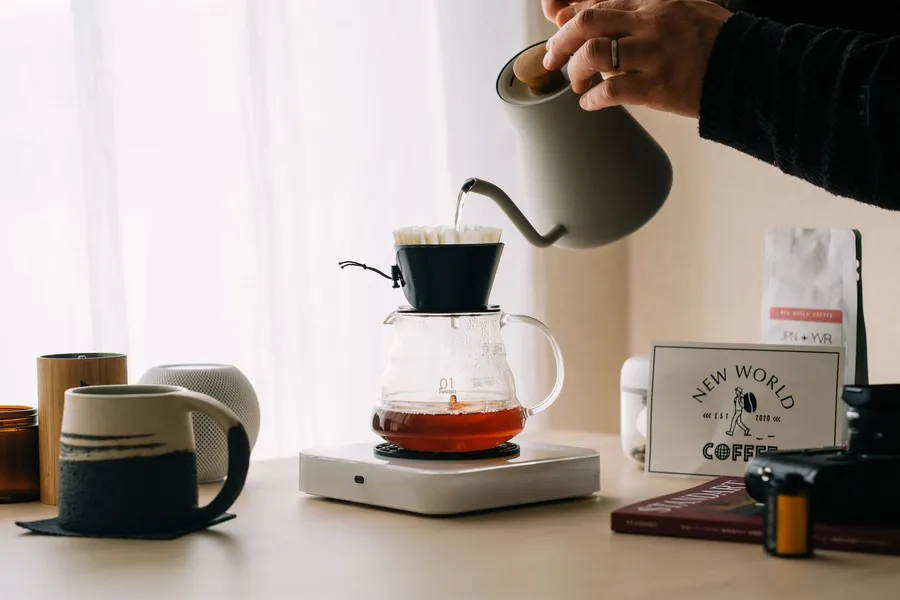
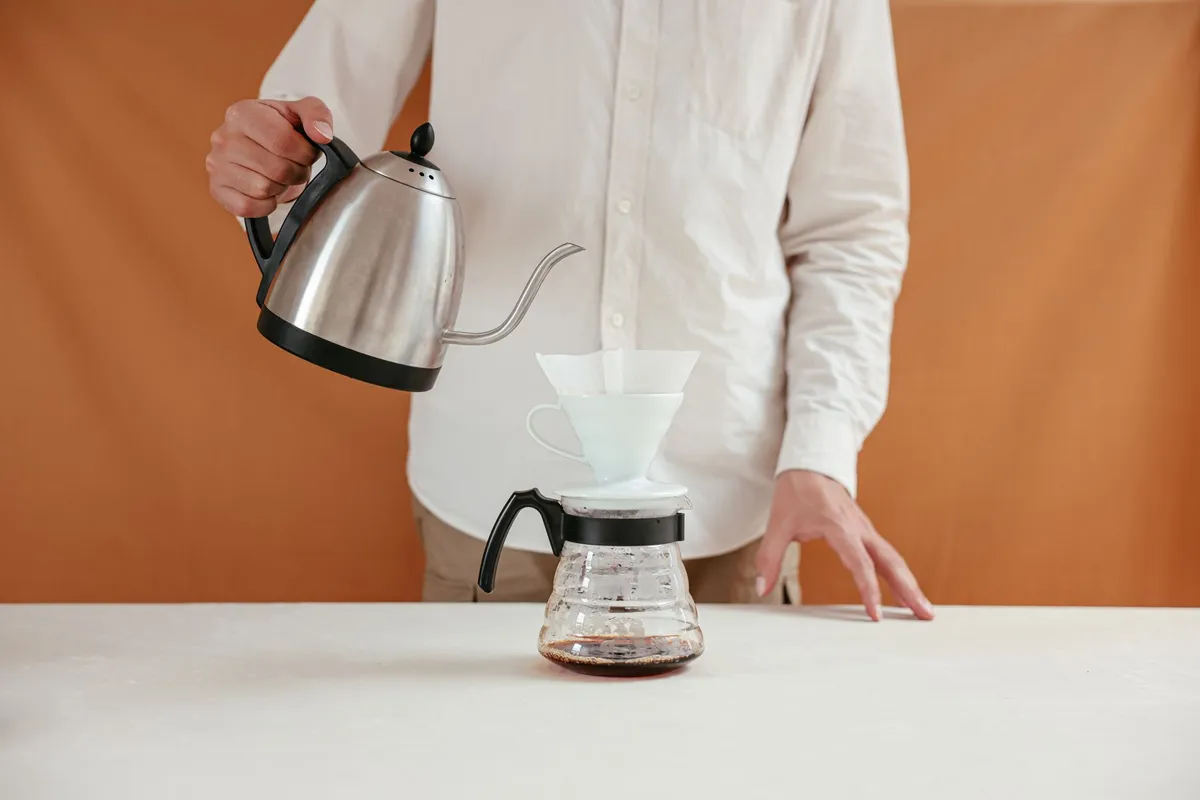
The gooseneck spout is the point here: it lets you pour a thin, steady stream over coffee grounds, which a standard spout can't do. Five presets run from 170°F to boiling, there's a keep-warm of up to an hour, and the inner lid and bottom are stainless steel. The trade-off is size: 0.8 liters is enough for a pour-over and a mug of tea, not for a family.
- Precise pouring for pour-over and Chemex
- Presets plus long keep-warm
- Stainless steel where it touches the water
- Small 0.8-liter capacity
- 1,200 W, so it's slower than a full-size kettle
- The thin spout is slow when you just want a big mug fast
Who it's for: pour-over coffee drinkers and one-person households.
Smeg KLF03: when the kettle lives on the counter
 Illustrative image
- 1950s-style stainless steel body
- 1.7 L, 1,400 W, 120 V
- Soft-opening lid, 360° swivel base
| Capacity | 1.7 L |
|---|---|
| Power | 1,400 W |
| Temperature range | Boil only |
| Material | Painted stainless steel |
| Functions | Soft-open lid, 360° base, removable filter |
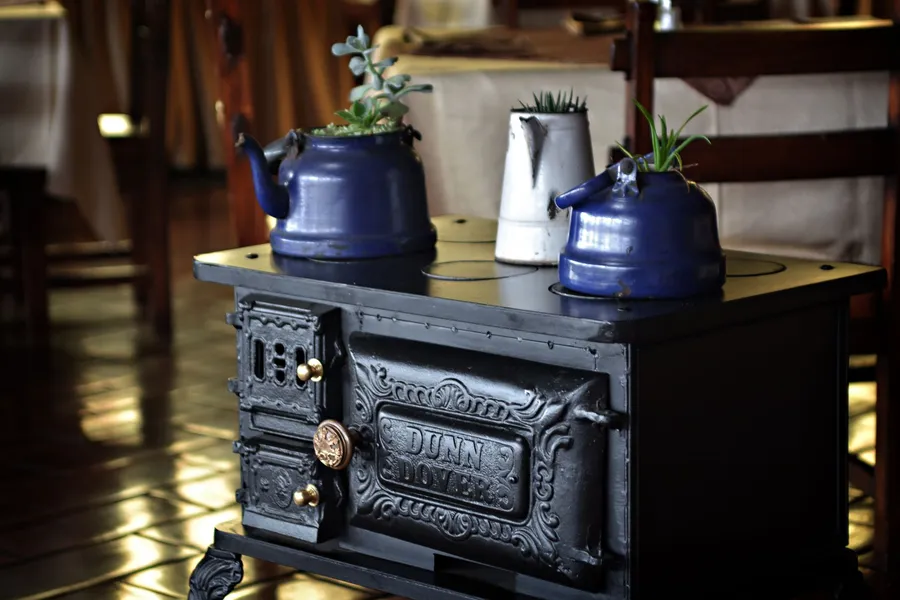
The 1950s-style Smeg is a kettle people buy with their eyes, and that's fine. Inside it's a 1.7-liter, 1,400 W boil-only kettle with a soft-opening lid, a 360° swivel base and a removable filter. What you're paying for is mostly the look: the Hamilton Beach boils water just as well for much less.
- Well-built, lots of colors
- Soft-opening lid, no splashing
- Looks good next to other Smeg appliances
- Loud at the boil, according to many owner reviews
- Heavy when full
- Premium price and no temperature control (that's the KLF04)
Who it's for: kitchens where the kettle stays out on the countertop and design matters.
| Cuisinart PerfecTemp CPK-17P1 Cordless Electric Kettle, 1.7 L | Hamilton Beach 40880 Stainless Steel Electric Kettle, 1.7 L | Cosori Electric Gooseneck Kettle with 5 Presets, 0.8 L | Smeg KLF03BLUS 50's Retro Style Electric Kettle, Black | |
|---|---|---|---|---|
| Best for | Best for most households | Best on a budget | Best for pour-over coffee | Best for design lovers |
| Capacity | 1.7 L | 1.7 L | 0.8 L | 1.7 L |
| Power | 1,500 W | 1,500 W | 1,200 W | 1,400 W |
| Temperature range | 6 presets, 160–212°F | Boil only | 5 presets, 170–212°F | Boil only |
| Material | Stainless steel | Stainless steel | Stainless steel | Painted stainless steel |
| Functions | 30-min keep-warm, removable scale filter | Auto shutoff, boil-dry protection | Gooseneck spout, 60-min keep-warm | Soft-open lid, 360° base, removable filter |
| Price band | Mid-range | Budget pick | Budget pick | Premium |
| See on Amazon | See on Amazon | See on Amazon | See on Amazon |
Why US kettles are slower than European ones
Most American kettles top out around 1,500 W because a standard 120 V, 15 A outlet can't safely deliver much more. In Europe, 230 V lets kettles run at 2,200 to 3,000 W. The physics is simple: heating a liter of water from about 60°F to boiling takes roughly 0.1 kWh in theory, so at 1,500 W you're looking at four minutes or a little more for a full liter, compared with under three minutes on a European kettle.
You can't fix that with a different kettle, but you can work around it. Boil only the water you need, keep the lid closed, and don't run the kettle on the same circuit as a microwave or space heater if your breaker trips easily. If you're already juggling a ceramic space heater in the kitchen this fall, that last point matters.
Variable temperature: who actually needs it
For black tea, herbal tea, oatmeal or pasta, boiling is right and a basic kettle is enough. Temperature control earns its keep with green and white teas, which turn bitter well above 180°F, and with pour-over coffee, which baristas brew just off the boil. The tea packaging is the simplest guide: usually 160 to 180°F for green, around 175 to 185°F for white, 190°F for oolong.
Yes, you could wait a few minutes with the lid open. But if green tea is a daily habit, the Cuisinart takes the guesswork out, and the keep-warm saves a second boil. Our view: someone who drinks delicate teas every day gets more from presets than from a designer finish.
| Drink | Typical temperature | Need presets? |
|---|---|---|
| Japanese green tea | 160–180°F | Yes |
| White tea | 175–185°F | Yes |
| Oolong | about 190°F | Helpful |
| Pour-over, French press | 195–205°F | Helpful |
| Black tea, herbal, oatmeal | boiling | No |
Stainless steel, glass or plastic
Stainless steel is the default for good reason: it doesn't stain, doesn't hold odors and survives being knocked around. The catch is single-wall construction, which gets hot, so keep it away from the counter edge if you have small kids. Glass lets you watch scale build up and water boil, but it's heavier and scratches. Plastic stays cooler outside and weighs less; if you want to avoid it entirely, look inside the kettle, because budget "stainless" models sometimes hide plastic around the lid and the water window.
Hard water is the other thing to plan for. A scale filter catches flakes but doesn't soften anything. Every few weeks, fill the kettle halfway with water and citric acid or white vinegar, bring it to a boil, let it sit, then rinse twice. Coffee people who descale their machines anyway can fold the kettle into the same routine; our guide on which coffee machine to buy covers the machine side.
Empty the kettle after use instead of leaving water in it overnight. Scale builds up much more slowly.
The small details you notice every day
Spec sheets all look alike, and the difference between a kettle you like and one that annoys you comes down to details. The first is the minimum fill: some kettles want at least half a liter before they'll run, so a one-mug drinker ends up heating twice the water they use. The second is the water window: ideally readable from both sides, so right- and left-handed people can see the level without turning the kettle around.
The lid matters too. A spring lid pops open with a button and is convenient, though it can puff a little steam at you; a soft-opening lid, like the Smeg's, is calmer and slower. The spout should pour without dribbling on the counter, something owners point out fast when it doesn't. Then there's the 360° base, now standard, and a spot to wrap the cord, handy when the outlet is a stretch away. On safety, every kettle we recommend shuts off at the boil and has boil-dry protection; look for UL or ETL certification on anything you buy, and skip listings that don't state it clearly.
One more detail: smell. A new kettle can leave a faint plastic or metallic taste the first few times. Manufacturers suggest boiling and discarding a couple of full kettles before you use it. If the smell is still there after a few days, that's a fair reason to send it back.
Finally, think about where it will live. A kettle near the sink is easy to fill; a kettle next to the coffee setup gets used more. Measure the space under your upper cabinets too: steam from a kettle that boils right under them can, over time, warp cabinet edges.
When to buy one, and when to skip it
A kettle makes sense if someone in the house drinks tea or makes pour-over every day, if you cook pasta often, or if you have an induction cooktop and want the burner free. Skip it if you make a cup of tea once a week: a saucepan does the same job. If you've got your eye on the Smeg, keep an eye on Prime Big Deal Days, when premium small appliances often show up.
Our verdict
For most households: Cuisinart PerfecTemp CPK-17P1, six presets and a full 1.7 liters.
For just boiling water on a budget: Hamilton Beach 40880, simple, stainless and cheap.
For pour-over coffee or a one-person kitchen: Cosori Gooseneck, precise pouring and an hour of keep-warm.
The Smeg KLF03 is for people who want the kettle to be part of the kitchen's look and are happy to pay for it.
View on Amazon.com Paid link
Frequently asked questions
Is an electric kettle better than a stovetop kettle?
Do electric kettles use a lot of electricity?
Is a plastic electric kettle safe?
How often should I descale an electric kettle?
Can I heat milk or soup in an electric kettle?
As an Amazon Associate I earn from qualifying purchases.

Emily Carter
Editorial byline of the English edition for home, kitchen and beauty. Angle: what verified reviews say happens after a month of use, and the cheap products that surprise.
Guide produced by the editorial team with AI tools from verified sources and published under the editorial responsibility of Andrea Bertolotti. How we work · Report an error
You may also like
Air fryer oven vs basket: which air fryer oven to buy
Air fryer ovens with a door, racks and a rotisserie: when they beat a basket air fryer, how much counter they take and four picks by kitchen and budget.
Air fryer dimensions: how much counter space you really need
Width, depth and height of three family-size air fryers, with a footprint table and the clearance you need for steam and the drawer.
Space heater: which one to buy for a bedroom, bathroom or office
Ceramic heater, bathroom model or oil-filled radiator: four space heaters for bedrooms, bathrooms and living rooms, and how to keep the electric bill in check.
The best guides, once a week
No spam: only products worth knowing about and deals that make sense.